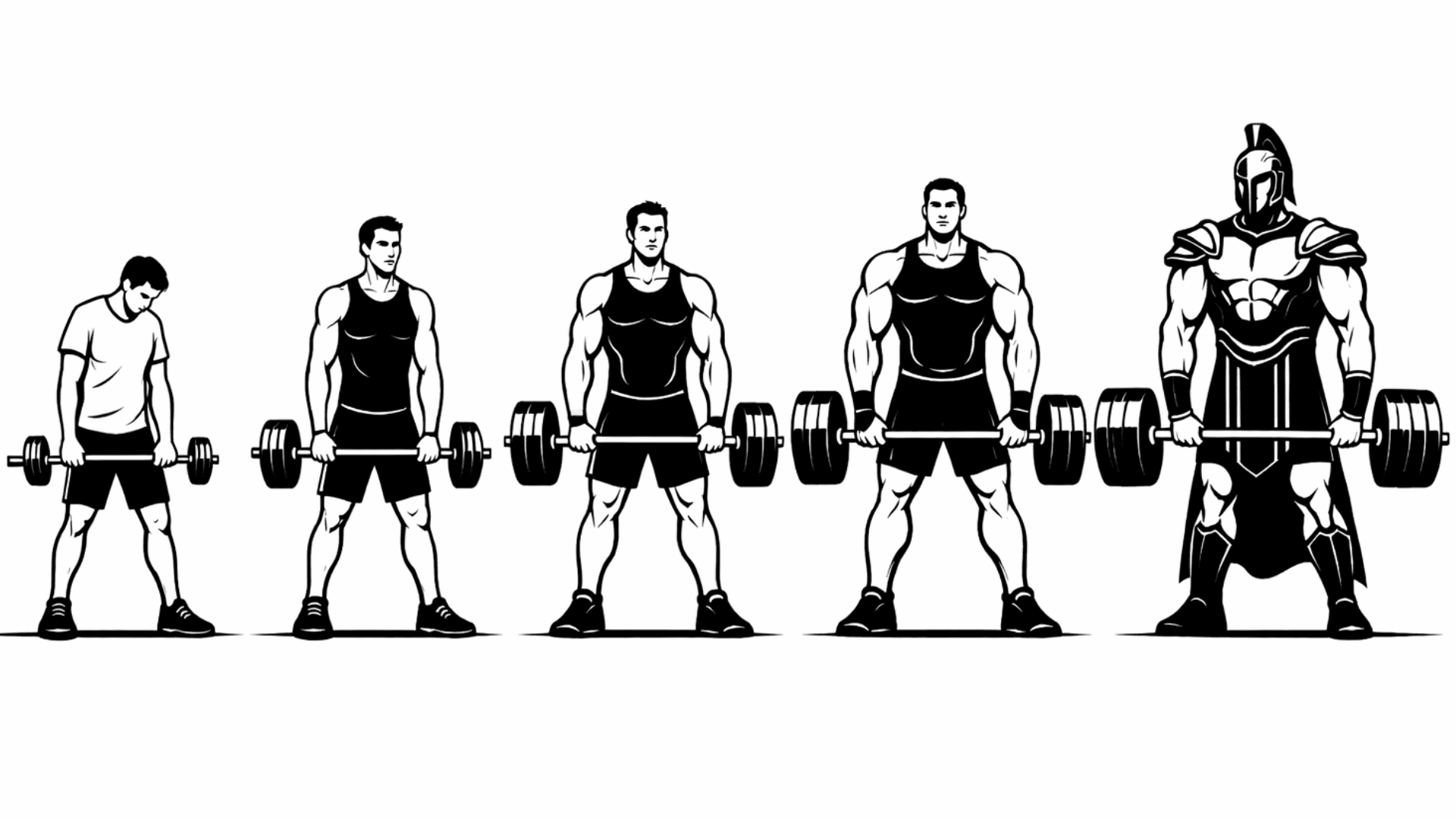
The workout pillar is the signal. It is the part you can see and measure. If the signal is weak or chaotic, the other pillars cannot save it.
Workout is non-negotiable because it creates the stress your body adapts to. Diet and recovery make that adaptation possible, but the training itself is the driver. A clear plan, clean technique, and steady progression matter more than variety or novelty. If you get this pillar right, the other two pillars have something to work with. If you get it wrong, no amount of nutrition or sleep can make up for a confusing or inconsistent signal. Keep the signal simple and repeatable always.
You should know
Strength is built by repeating the same high-quality movements with small, planned increases. That is not boring. That is how you get stronger.
Start here
If you are new, your job is simple: train the main lifts, progress slowly, and recover well.
Start this week:
- Train three days per week.
- Focus on squat, bench, deadlift, and overhead press.
- Add small weight jumps and keep reps clean.
- Log every session and note how the sets felt.
First month focus:
- Keep the same exercises every session.
- Use the smallest jumps that still feel meaningful.
- Leave one or two reps in reserve on most sets.
- Review your log each weekend and look for patterns.
You should know
If you do not log your workouts, you are guessing. A simple log is the fastest way to improve.
Workout foundations
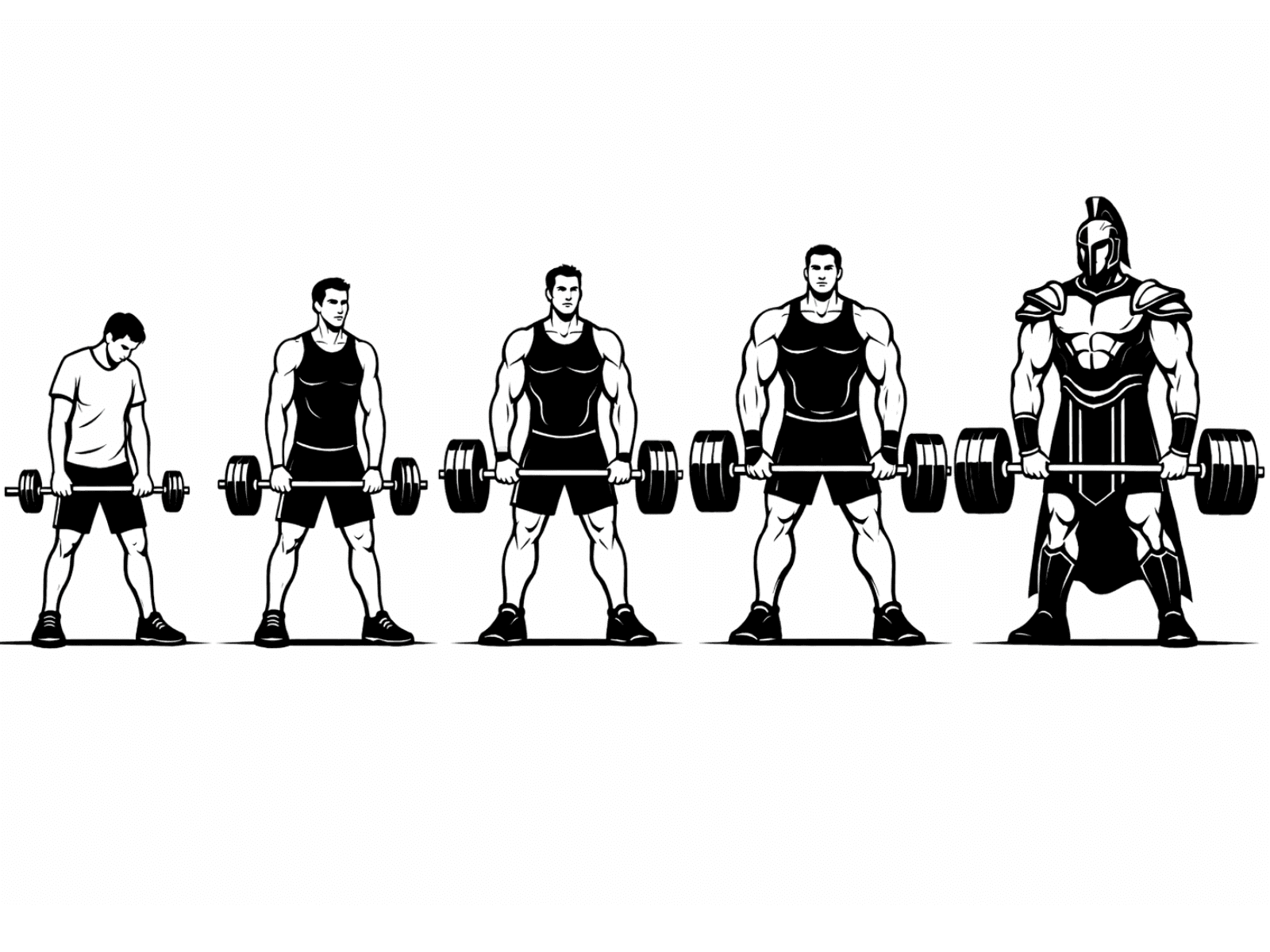
Strength training works when you build around the main movement patterns and repeat them often enough to improve technique.
The core lifts
- Squat: trains legs, core, and total body bracing.
- Bench press: trains chest, shoulders, and upper back stability.
- Deadlift: trains posterior chain and full-body tension.
- Overhead press: builds shoulder strength and trunk control.
Technique before load
Good technique is not just safety. It is performance. Clean reps allow you to repeat the same pattern long enough to progress.
You should know
The fastest path to heavier weights is cleaner reps, not bigger jumps.
Warm-ups that work
Warm-ups are technique practice. They should feel like rehearsal, not cardio.
A simple ramp:
- Bar only: 2 to 3 sets of 5.
- Light plates: 2 to 3 sets of 3.
- One heavier single before work sets.
If your warm-ups feel heavy, reduce the load and clean up your setup. The goal is to make the work sets easier to execute, not harder.
Session structure and rest periods
Strength is not built by rushing. Most quality sets require full focus and enough rest to repeat the same movement pattern.
Practical rules:
- Rest 2 to 4 minutes between heavy sets.
- Take longer rest on squats and deadlifts.
- Keep your setup consistent across every set.
If your heart rate is still high, wait. The goal is not to finish fast. The goal is to finish with consistent bar speed and clean reps. When you rush, technique slips and fatigue rises. When you rest enough, every set teaches the same pattern and progression stays predictable.
A simple session structure:
- Warm-up and ramp sets.
- Main lift work sets.
- One to two accessories that support the main lift.
- Short cooldown or mobility work.
You should know
If your rest periods are too short, the set quality drops and the training signal gets noisy.
Progression rules
Progression is the engine of strength. You only need a few rules to keep it moving.
Small, repeatable jumps
Add weight in small steps you can repeat. For most beginners, that means 2.5 to 5 lb on upper body lifts and 5 to 10 lb on lower body lifts.
Repeat when needed
If a set is slow or form breaks, repeat the same load next session. Do not chase a PR when the rep quality is not there.
You should know
Repeating a load is not a failure. It is how you keep the signal clean while recovery catches up.
Control the volume
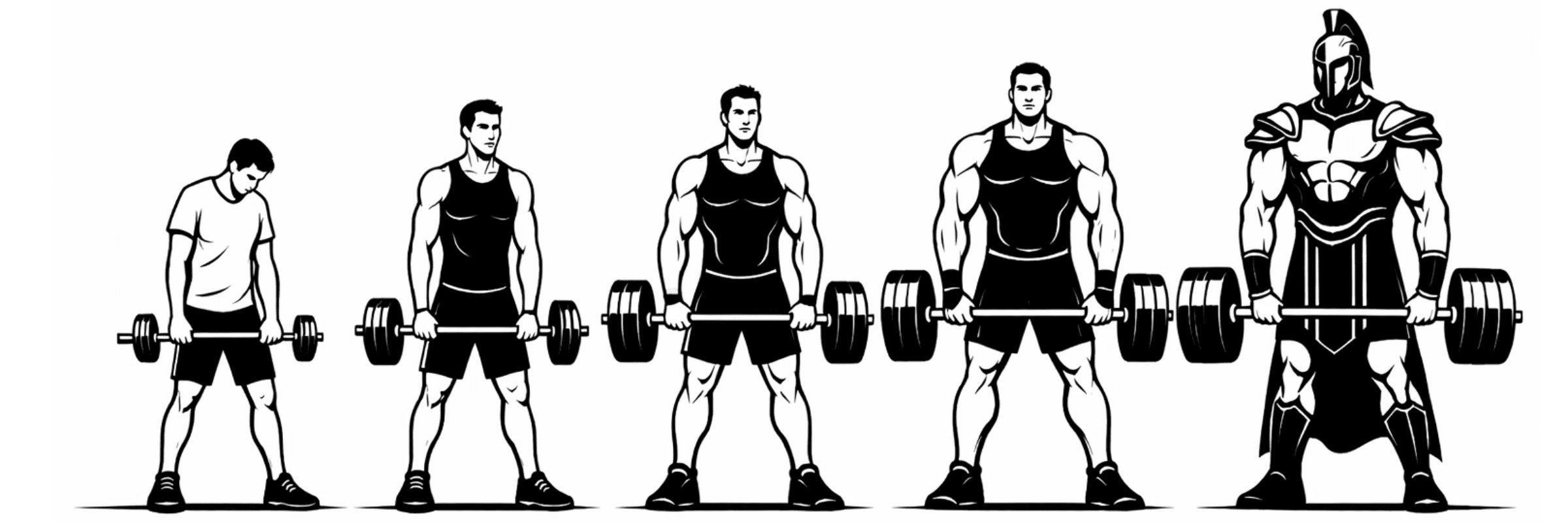
Do enough sets to drive progress but not so many that recovery collapses. For beginners, that usually means 10 to 15 hard sets per movement pattern per week.
Set and rep ranges that work
For strength progression, most main lift work should live in the 3 to 6 rep range. That is heavy enough to build strength while still letting you practice technique.
A simple approach:
- Main lifts: 3 to 5 sets of 3 to 5 reps.
- Secondary lifts: 2 to 3 sets of 6 to 8 reps.
- Accessories: 2 to 3 sets of 8 to 12 reps.
You do not need to chase variety. Keep the structure consistent and let the load move up slowly.
You should know
If you are always lifting in high reps, you are training endurance more than strength. Keep the main work heavy enough to matter.
Accessory work done right
Accessory work is useful when it supports your main lifts. It is not a substitute for them.
Use accessories for:
- Weak positions, like mid-range on the squat or lockout on the bench.
- Muscle groups that stabilize the big lifts, like upper back and hamstrings.
- Injury prevention, such as controlled single-leg or row variations.
Keep accessories simple:
- 2 to 4 movements per week.
- 2 to 3 sets each.
- Leave 2 to 3 reps in reserve.
You should know
Accessories should make the main lifts better, not compete with them.
How it changes once LP ends
Linear progression stops when recovery cannot keep up with session-to-session jumps. That does not mean you are advanced. It means you need a smarter structure.
What changes first
- You move from session-to-session jumps to weekly progressions.
- You add light days or volume waves.
- You plan deloads instead of waiting for a crash.
What stays the same
- The main lifts stay the main lifts.
- Technique remains the priority.
- Small adjustments beat big changes.
Intermediate training is still simple. You are just managing fatigue more intentionally. Advanced principles add more structure, not more chaos.
Intermediate focus
- Use weekly progression instead of daily jumps.
- Track volume landmarks and avoid sudden spikes.
- Use RPE or bar speed to decide when to repeat a weight.
Advanced focus
- Plan blocks around a specific goal.
- Keep the competition lifts central and reduce junk volume.
- Use planned peaks instead of random max testing.
The common thread is controlled progression. The more advanced you get, the more your program should protect recovery so you can train hard and consistently.
How to tell if your workout is working
A good program produces small, repeatable wins. Use simple checks:
- Are you adding weight or reps every 1 to 2 weeks?
- Are your warm-ups and work sets moving with consistent bar speed?
- Are you recovering within 48 to 72 hours?
- Are your technique notes improving over time?
If the answers are mostly yes, keep going. If the answers are mostly no, reduce stress, fix recovery, and reassess before you change the program.
Common mistakes
These mistakes slow progress faster than any lack of motivation. Keep them off your program.
- Adding too many accessories before the main lifts are stable.
- Increasing weight when form is breaking down.
- Training to failure every session.
- Ignoring warm-ups because you are in a rush.
- Changing programs every few weeks.
- Skipping rest days and calling it work ethic.
- Relying on novelty instead of progression.
If you are unsure what to do, simplify. Cut accessories, reduce volume, and focus on clean main lifts for two weeks. That reset often brings progress back without any major change. Then rebuild slowly.
You should know
The fastest way to stall is to change the plan before it has time to work.
How this pillar interacts with the other two
Workout is the signal. Diet and recovery decide how much of that signal becomes strength.
- Diet: protein and carbs support high-quality work sets and faster recovery between sessions. See Diet.
- Recovery: sleep and stress control determine how much training you can absorb. See Recovery.
If your training is stalling, check sleep and food before you change the program. Most stalls are recovery problems, not programming problems.
Beginner path
Start with a proven program and a few focused resources.
Programs:
Related reading:
- Linear Progression vs Periodization
- Add Weight to the Bar Without Getting Hurt
- Warm-Up Sets for Squat/Bench/Deadlift
- Technique Priorities: Squat, Bench, Deadlift
FAQ
How many days should I lift as a beginner?
Three days per week is enough to make fast progress and still recover well.
Do I need to train to failure to get strong?
No. Stop sets with 1 to 2 reps in reserve so you can repeat quality work.
What if only one lift stalls?
Repeat the load, tighten technique, and use smaller jumps for that lift.
Should I add accessories early?
Keep accessories minimal until the main lifts are stable and progressing.
When should I move past linear progression?
When stalls repeat despite good sleep, food, and clean reps.
How long should a workout take?
Most sessions should fit in 45 to 75 minutes with focused effort.
Is cardio bad for strength?
No. Keep it light and do not let it interfere with recovery.
Sources (to add)
Evidence note: Add citations for key claims in this article.
- Author, A. (Year). Progressive overload and strength adaptation principles.
- Author, B. (Year). Training volume and frequency guidelines for novice lifters.
- Author, C. (Year). Technique quality and injury prevention in resistance training.