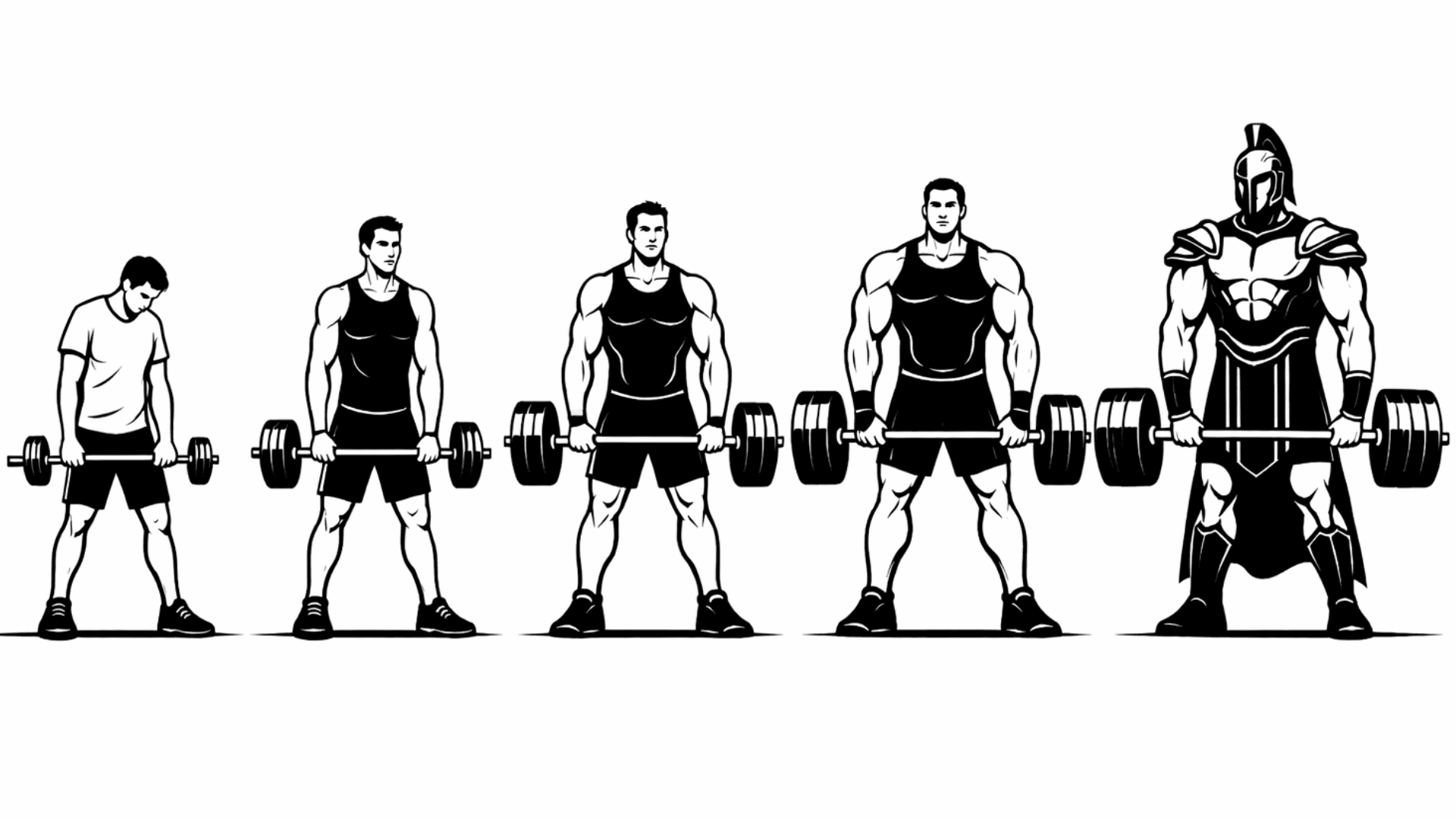
Adding weight safely is less about courage and more about consistency. Beginners get strong fast when they use small jumps, keep technique clean, and recover between sessions. This guide shows how to increase load without getting hurt or stalling early.
TL;DR
- Use small weight jumps, especially on upper‑body lifts.
- Prioritize clean reps and stable positions over fast increases.
- Track bar speed and recovery signals, not just numbers.
- If you miss reps twice, reduce the jump size before changing the program.
- Add weight only when the last rep looks like the first.
- Recovery habits are part of progression, not optional extras.
What to do this week
- Reduce your jump size if your last reps are grinding.
- Film one top set to check technique.
- Use Warm‑Up Ramp Sets to rehearse positions.
- Sleep and eat consistently so recovery stays predictable.
- Run a simple plan like Starting Strength or GZCLP.
Why safe progression matters
Progress happens when stress is followed by recovery. If you add weight too fast, technique breaks and recovery costs rise. That is how beginners get stuck or hurt.
A safe progression is one that you can repeat every week. If you are guessing, you are going too fast.
You should know
A rep that feels like a grind is a signal to reduce the jump size, not to add more effort.
The simplest progression rule
Use a small, repeatable increase and only add weight when technique stays clean.
- Lower‑body lifts: small jumps that you can repeat without form breakdown.
- Upper‑body lifts: even smaller jumps to protect shoulders and elbows.
If you are unsure, start with smaller jumps. You can always increase later.
For the full framework, see Linear Progression Explained.
Choosing the right jump size by lift
Lower‑body lifts tolerate larger jumps because more muscle mass is involved. Upper‑body lifts usually need smaller jumps to keep technique clean. A simple rule: when a jump changes the rep speed or setup, it is too big.
If you are using small plates or microloading, that is a sign you are doing it right. Smaller jumps keep progress steady and protect your joints.
A simple progression example
Here is a simple two‑week example for a beginner squat:
- Week 1: Add a small jump each session if reps are clean.
- Week 2: If the last rep slows, repeat the weight once before adding again.
The same idea applies to bench and deadlift. The goal is clean, repeatable progress, not daily PRs.
How to track progress without overthinking
Use a short log entry for each lift:
- Top set weight and reps.
- A quick note on bar speed (fast, normal, slow).
- A note on technique if anything drifted.
This keeps you honest and makes it easier to decide whether to add weight next session.
A technique checklist before adding weight
Before you add load, confirm these basics:
- Setup is identical to previous sessions.
- The bar path is predictable and close.
- You can brace without losing position.
- The last rep looks like the first rep.
If any of these are missing, repeat the weight and fix the weakest point first.
How to know when a jump is too big
A jump is too big when it changes your technique or recovery. Look for these signs:
- The last rep slows dramatically compared to the first.
- Your bar path changes or your setup becomes sloppy.
- You are sore for multiple days after the session.
- You need multiple extra warm‑up sets to feel stable.
If two or more signs show up, reduce the jump or repeat the weight.
You should know
Consistent, clean reps build strength faster than occasional big jumps.
What to do after a missed rep
One missed rep is not a crisis. Use a simple response:
- Repeat the same weight next session.
- Reduce the jump size if the miss happens again.
- Check sleep and food before you blame the program.
If misses continue for multiple weeks, shift to a weekly progression plan like GZCLP or 5/3/1 for Beginners.
The role of microloading
Microloading means using very small plates to keep progress moving. It is especially useful on presses.
- Use it when the standard jump causes slow, ugly reps.
- Keep the same rep range, just smaller increases.
- Track progress weekly instead of session to session if needed.
Microloading keeps you in control and prevents early stalls.
Using back‑off sets to reinforce technique
Back‑off sets are lighter sets after your top work. They help you practice clean reps without extra fatigue.
- Use one back‑off set at 5–10% lighter than your top set.
- Keep the reps crisp and controlled.
- Stop if technique starts to drift.
Back‑off sets are a safer way to add practice than adding more weight.
Upper‑body progression needs more patience
Presses and bench typically progress more slowly than squats and deadlifts. Use smaller jumps, longer rest, and clean setup.
If your upper‑body lifts stall first, that is normal. Reduce the jump size and focus on repeatable technique. Use fractional plates if you can. Tiny jumps add up over months without forcing sloppy reps. Small jumps compound quickly when you stay consistent.
Recovery is part of adding weight
If your recovery is poor, even small jumps will feel heavy. Keep these basics consistent:
- Sleep: aim for steady 7–9 hours.
- Nutrition: enough protein and carbs to support training.
- Stress: reduce accessory volume when life is heavy.
For recovery guidance, read Sleep for Lifters and Stress and Strength.
If recovery improves, you can return to the normal jump size. If recovery stays poor, reduce volume before you change the program.
Common mistakes
- Jumping too fast. It looks bold but slows progress.
- Chasing PRs every session. You need repeatable progress, not constant maxing.
- Ignoring technique drift. Bad reps accumulate and lead to stalls.
- Under‑recovering. Adding weight requires sleep and food.
How this changes after the novice phase
When linear progression slows, you do not force it. You change the progression model.
- Use a weekly progression plan like GZCLP.
- Move to longer cycles like 5/3/1 for Beginners.
- Learn the transition signals in When You’re Not a Novice Anymore.
Pillars Check
Workout
- Use small jumps and repeat clean reps.
- Keep the main lifts consistent so progress is easy to measure.
Diet
- Fuel training with consistent protein and carbs.
- Under‑eating makes even small jumps feel heavy.
Recovery
- Sleep and stress control the pace of progression.
- Reduce volume when recovery is poor before changing the program.
See the Workout, Diet, and Recovery pillars for the full foundation.
FAQ
How often should I add weight?
Add weight when all reps are clean and bar speed is stable. If form slips, repeat the weight.
What if I miss a rep?
Repeat the weight next session and reduce the jump size if the miss happens again.
Is it normal to slow down on upper‑body lifts?
Yes. Upper‑body lifts usually need smaller jumps and more patience.
Should I reset after a stall?
Only after you have tried smaller jumps and improved recovery. A reset is a tool, not a default.
What should I read next?
Sources (to add)
Evidence note: Add citations for progression pacing, microloading benefits, and novice strength adaptation.
- Add source: Linear progression outcomes for beginners.
- Add source: Microloading and training adherence.
- Add source: Recovery factors and strength progression.