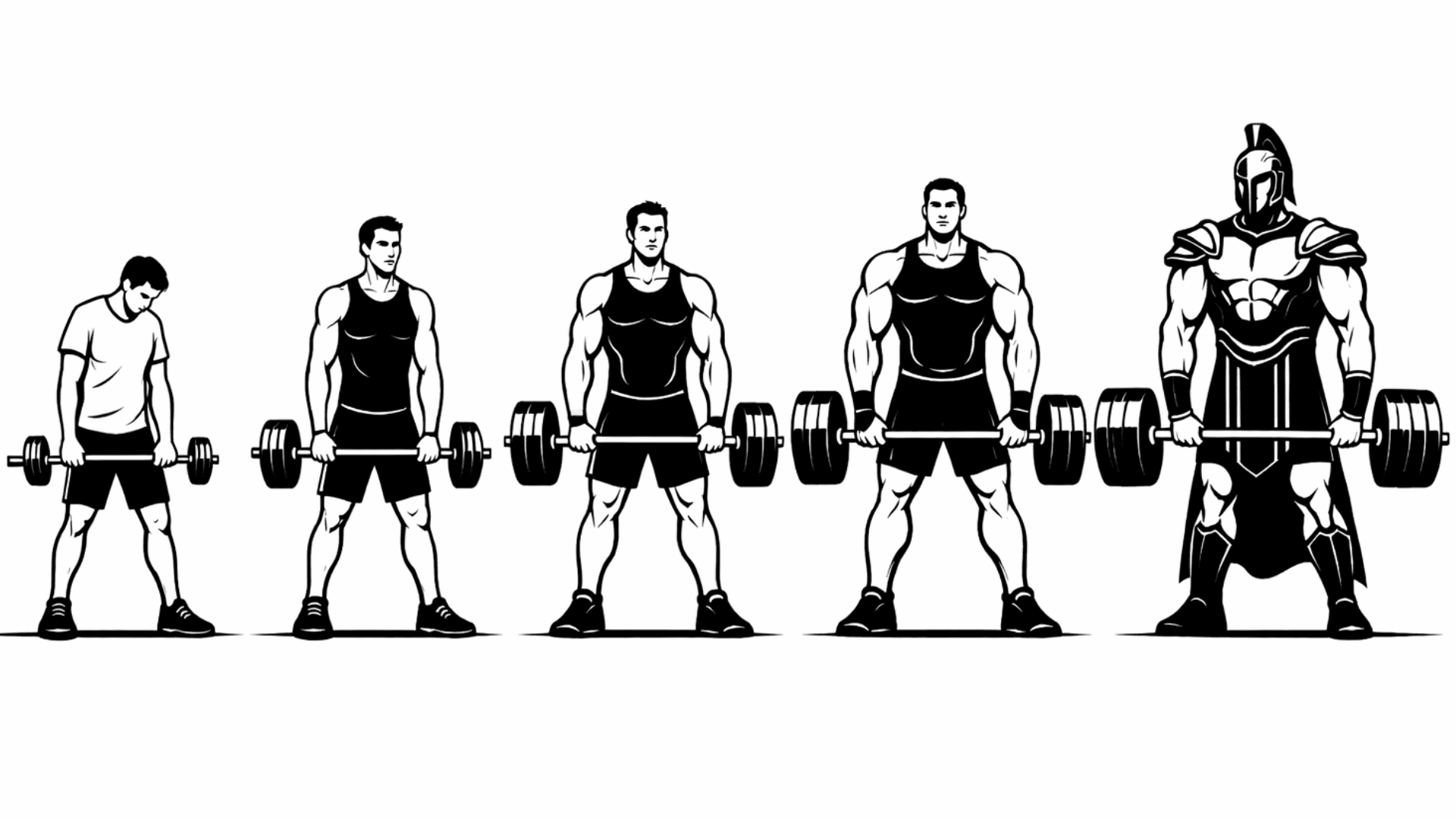
Choosing between Starting Strength and GZCLP is a good problem. Both work for beginners when you train consistently, use small jumps, and recover well. The real question is which structure you can execute without overthinking it.
TL;DR
- Starting Strength is simpler and works fast for true novices.
- GZCLP adds more volume and structure when you want a broader base.
- If you can train three days and want minimal decisions, Starting Strength wins.
- If you want a bit more variety and volume, GZCLP is a strong next step.
- Either choice works if you track progress and recover well.
What to do this week
- If you are brand new, run Starting Strength for 8–12 weeks.
- If you already know the lifts and want more structure, choose GZCLP.
- Pick a small jump size and log every session.
- Review your technique with Technique Priorities: Squat, Bench, Deadlift.
- Sleep and eat enough to recover between sessions.
Starting Strength in plain terms
Starting Strength is the simplest: two workouts (A/B), three days per week, and small weight jumps each session. Squats happen every session, presses alternate, and deadlifts are heavy but low‑volume.
Why beginners like it
- Fewer decisions and fewer exercises.
- Clear progression rules.
- Easy to track and troubleshoot.
Where it can feel limited
- Less variety in movement selection.
- Volume is lower than some lifters prefer.
- Some people want more upper‑back or accessory work.
If you want a clean path to your first real strength gains, this is hard to beat.
You should know
Starting Strength works best when you keep the schedule consistent and avoid adding accessories too early.
GZCLP in plain terms
GZCLP adds a tiered system: heavy T1 work, moderate T2 work, and lighter T3 accessories. It still uses linear progression, but the tiers allow you to add volume while keeping heavy work intact.
Why beginners like it
- More volume for technique practice and muscle balance.
- Clear tier structure and stall protocol.
- More flexibility in exercise selection.
Where it can get messy
- Too much accessory volume can crush recovery.
- AMRAP sets can turn into max‑out sessions.
- More moving parts means more chances to overthink.
If you want a broader base and can recover well, GZCLP is a strong choice.
You should know
GZCLP only works if you treat the T1 lifts as the priority and keep T3 volume in check.
How progression differs
Both use linear progression, but they apply it differently.
- Starting Strength: one main work set scheme and small jumps every session.
- GZCLP: heavy T1 work progresses with a stall protocol, while T2/T3 build volume and rep capacity.
If you like a single clear target, Starting Strength fits. If you prefer multiple ways to progress, GZCLP fits.
In both programs, logging matters. If you do not track the exact weights and reps, you cannot see whether the progression rules are working.
At‑a‑glance comparison
Use this quick summary to match the program to your situation.
Starting Strength strengths
- Very simple structure and exercise list.
- Easy to recover from if sleep and food are consistent.
- Clear session‑to‑session progression with minimal decisions.
Starting Strength tradeoffs
- Less total volume and less variety.
- Upper‑back and accessory volume can feel low for some lifters.
GZCLP strengths
- Tiered structure builds strength and volume together.
- Multiple ways to progress each week.
- More flexibility in exercise selection.
GZCLP tradeoffs
- Higher recovery demands due to added volume.
- More moving parts to track and manage.
If you are not sure, default to the simpler option. You can always move up to more volume later.
How to choose based on your schedule
Your schedule is the most honest filter.
Choose Starting Strength if you:
- Train three days per week, consistently.
- Want the fewest exercises and the least planning.
- Prefer simple session‑to‑session jumps.
Choose GZCLP if you:
- Can train three to four days per week.
- Want a bit more volume and variety.
- Prefer having multiple ways to progress.
Decision examples for common beginners
Use these examples if you still feel stuck:
- You are brand new, your schedule is tight, and you want the simplest plan. Pick Starting Strength. It reduces decision fatigue and gives you clear session goals.
- You have lifted before and like structure, but you want more variety. Pick GZCLP. The tiered system lets you keep the main lifts while adding volume.
- You are coming back after a long break. Start with Starting Strength for a short block, then move to GZCLP once the basics feel smooth again.
The point is not to find a perfect program. It is to find the one you will execute without skipping sessions or adding random changes.
Recovery and time demands
Starting Strength sessions are usually shorter because there are fewer movements. GZCLP sessions can run longer because of the extra T2/T3 work. If your life schedule is tight, the shorter sessions may be the difference between consistency and missed workouts.
Recovery follows the same pattern. The more volume you add, the more sleep and food you need. If your sleep is inconsistent, Starting Strength is often the safer choice. If your recovery is strong and you want more volume, GZCLP can be a better long‑term fit.
If you are also doing sport practice or conditioning, lean toward the simpler option. If training is your main focus and recovery is strong, the higher‑volume option can work well.
How to avoid beginner stalls in either program
Most stalls are not about effort. They are about recovery or technique.
- Use smaller jumps sooner than you think.
- Keep reps clean and consistent.
- Review your warm‑up strategy with Warm‑Up Sets for Squat/Bench/Deadlift.
- Plan sleep and food as part of the program.
For a deeper explanation of stalls, read Linear Progression Explained.
When to move beyond both
Eventually, session‑to‑session increases stop working. That is the signal to move to weekly progression or periodized training.
A reliable next step is 5/3/1 if you want long‑term, sustainable progress. For more on the transition point, read When You’re Not a Novice Anymore.
Pillars Check
Both programs depend on the same three pillars.
Workout
- Keep the main lifts consistent and track progress weekly.
- Use the smallest weight jumps that still feel meaningful.
Diet
- Eat enough total calories to recover from frequent sessions.
- Maintain consistent protein and carbs around training.
Recovery
- Sleep 7–9 hours where possible.
- Manage stress so fatigue does not stack week to week.
See the Workout, Diet, and Recovery pillars for deeper guidance.
FAQ
Which program builds strength faster?
For true beginners, Starting Strength is usually faster at first. GZCLP can catch up once you need more volume.
Can I add conditioning to either program?
Yes, but keep it light and short so it does not reduce recovery.
What if I only have three days per week?
Both programs work on three days per week. Starting Strength is simpler at that frequency.
Do I need power cleans for Starting Strength?
They are optional. A simpler hinge or row variation is fine until you learn the lift.
Can I combine the programs?
It is better to run one program at a time. Switching mid‑cycle adds noise and slows progress.
What should I read next?
Sources (to add)
Evidence note: Add citations for beginner progression outcomes and the original program sources.
- Starting Strength overview (source link to add).
- GZCL method overview (source link to add).